Photo courtesy of Maersk
For years, discussions around ethanol and biofuels have focused largely on what comes next for cars, trucks, and increasingly, aviation.
But a new development from global shipping giant Maersk is a reminder that the next major opportunity for American agriculture may extend far beyond roads and runways.
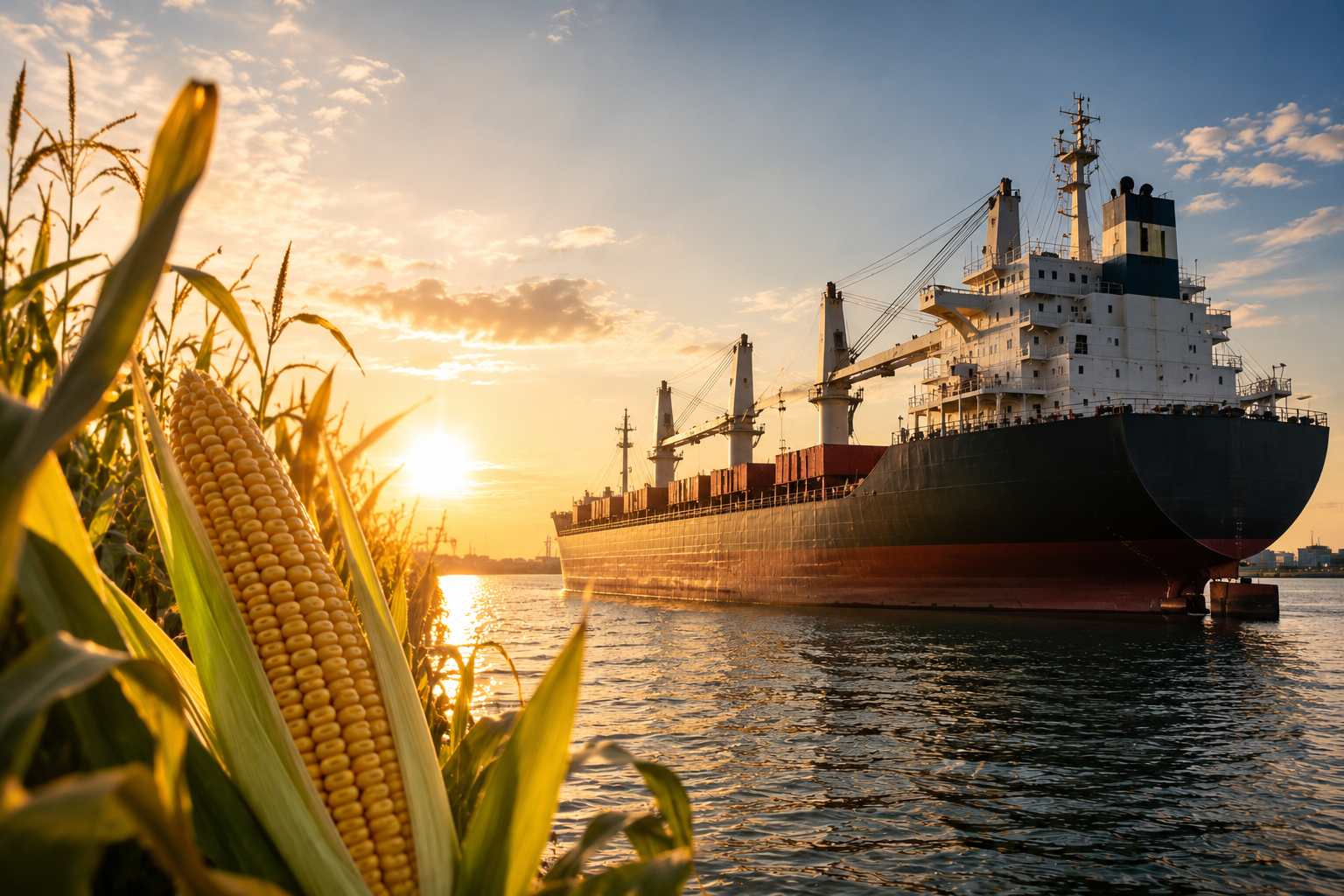
This week, Maersk announced it successfully completed its first vessel voyage powered entirely by ethanol, marking another milestone in the company’s broader effort to reduce emissions and diversify its fuel portfolio. The company said earlier testing confirmed ethanol could be safely integrated into its dual-fuel engine systems and pointed to ethanol as another scalable lower-emission fuel option moving forward.
That matters because shipping is not a small market.
Global shipping moves roughly 90 percent of world trade and accounts for a significant share of global emissions. As international companies and regulators push for lower-carbon solutions, shipping companies are increasingly searching for practical fuel alternatives that can scale.
And increasingly, ethanol is finding its way into that conversation.
Maersk has invested heavily in vessels capable of operating on lower-emission fuels and has continued expanding its fleet strategy around dual-fuel technology. The company has committed to reaching net-zero greenhouse gas emissions by 2040 and views fuel flexibility as a key part of that strategy.
For agriculture, this is part of a much larger story.
Conversations around sustainable aviation fuel have rightly received significant attention because of the market opportunities they could create for farmers and ethanol producers. But developments like this suggest the conversation may be broader than many anticipated.
Shipping. Aviation. Heavy transportation. New industrial fuel markets.
These sectors are all asking versions of the same question: where will scalable lower-carbon fuel supplies come from?
American agriculture already produces renewable fuels at scale.
The significance of the Maersk announcement is not that one ship completed one voyage. It is that another major global industry is actively exploring ethanol as part of its long-term strategy.
For farmers facing difficult economic conditions and ethanol producers looking toward future growth opportunities, expanding demand matters. Because the future of biofuels may not just be about getting drivers to the gas station. It may also be about helping power cargo ships crossing oceans.
And that’s a conversation worth paying attention to.