This week, Iowa Corn and the Iowa Renewable Fuels Association released a new economic analysis that should serve as a wake-up call for anyone who cares about the future of Iowa agriculture and our rural economy.
The findings are clear: without new demand for corn, Iowa risks heading toward an economic downturn that feels uncomfortably similar to the 1980s farm crisis.
A Shrinking Footprint for Corn
According to the USDA’s long-term outlook, corn acreage nationwide is projected to decline by about 10% over the next decade, more than 20 million acres. For Iowa, that’s especially concerning. Corn accounts for nearly 30% of our state’s total agricultural revenue, making it a cornerstone of farm income, rural jobs, and local tax bases.
When corn acreage shrinks, the impact doesn’t stop at the farm gate. It ripples through equipment dealers, co-ops, grain handlers, ethanol plants, and small-town Main Streets across the state.
High Productivity, Not Enough Demand
Iowa farmers are producing more corn than ever. Yields continue to rise thanks to better genetics, technology, and agronomic practices. But productivity alone does not guarantee profitability.
The analysis shows that without new sources of demand, corn prices face sustained downward pressure. In fact, if production continues to outpace demand, prices could fall to levels that force farmers to rely heavily on government support programs. That path leads to consolidation, fewer family farms, and long-term economic damage in rural communities.
The Demand Gap and the Opportunity Ahead
The good news is that Iowa has real opportunities to close this growing demand gap.
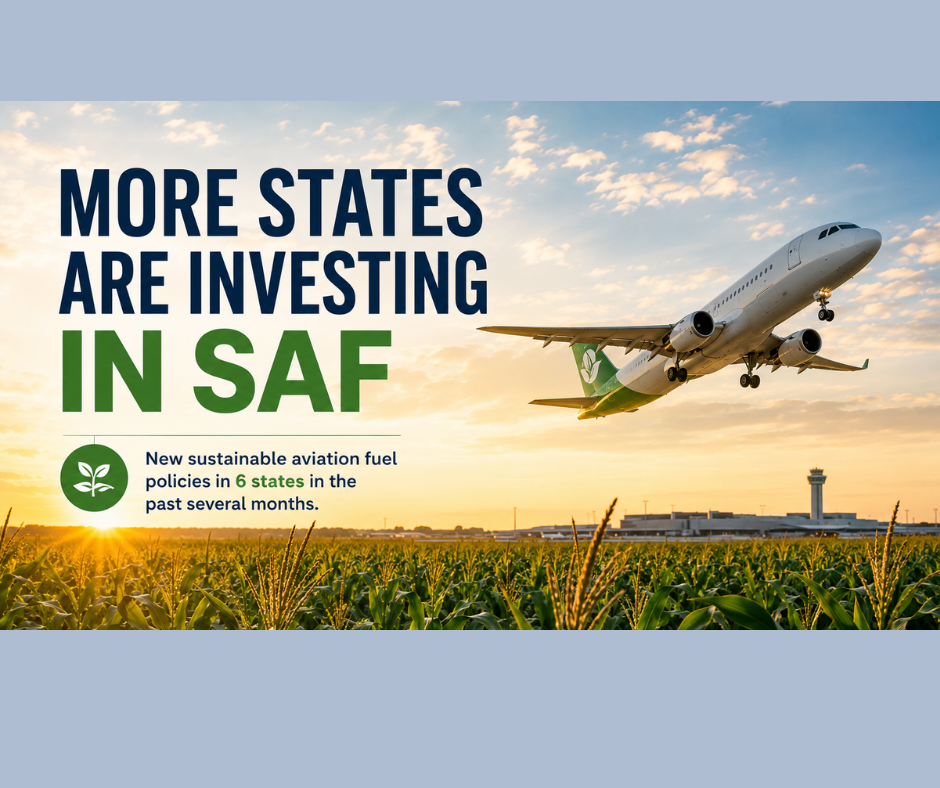
Nationwide year-round E15 alone could create 1 to 2 billion bushels of new corn demand in the near term. Beyond that, emerging global markets offer even greater potential. Capturing just a small share of the international marine fuel market could translate into roughly 1.5 billion bushels of additional corn demand. Sustainable aviation fuel represents an even larger opportunity, with projected demand that could require billions of bushels of corn over time.
These markets are not theoretical. Airlines, shipping companies, and international buyers are actively seeking low-carbon fuel options right now.
The Infrastructure Reality
There is one critical catch: Iowa farmers and ethanol producers cannot access these markets without the ability to produce ultra-low-carbon ethanol.
That requires carbon capture infrastructure.
Neighboring states are already moving forward. Without similar infrastructure in Iowa, not one gallon of Iowa ethanol can qualify for use in sustainable aviation fuel. That puts our farmers and ethanol plants at a serious competitive disadvantage and risks sending investment, jobs, and market share elsewhere.
A Choice for Iowa
This analysis reinforces a simple truth: Iowa’s future depends on whether we choose to grow demand or manage decline.
Cutting acres, relying on safety-net programs, and watching farms consolidate is not a strategy for long-term success. Supporting new markets, modern infrastructure, and technologies that keep Iowa agriculture competitive is.
The path forward is clear. Iowa must embrace solutions that open new markets for corn, strengthen ethanol’s role in a changing energy landscape, and give farmers a fair chance to succeed.
The stakes are high, and the time to act is now.