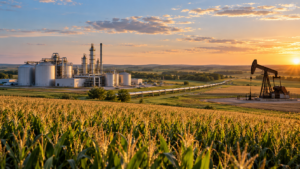
Across America’s corn-growing regions, ethanol plants already turn a homegrown crop into a dependable transportation fuel. They also offer one of the most practical places to advance ethanol carbon capture, creating another way for agriculture to contribute to American energy production while opening the door to new markets.
The reason starts with the ethanol-making process itself. During fermentation, yeast converts the sugars in corn into ethanol and carbon dioxide. That carbon dioxide is produced in a highly concentrated stream. The U.S. Department of Energy reports that fermentation can produce a carbon dioxide stream that is more than 95% concentrated. By comparison, carbon dioxide in the exhaust from many industrial facilities is mixed with other gases and requires more separation before it can be captured.
That difference matters. At an ethanol plant, capturing fermentation carbon dioxide largely involves removing moisture, compressing the gas and preparing it for transportation. The technology is established, and some ethanol facilities have captured carbon dioxide for years for use in food, beverage and other commercial markets.
How ethanol carbon capture works
Once the carbon dioxide has been captured and compressed, it can move by pipeline, truck or other approved transportation method to an appropriate destination. Depending on local geology, infrastructure and market demand, the carbon dioxide may be stored permanently in deep geologic formations or put to productive use.
One established use is enhanced oil recovery. In suitable oil fields, carbon dioxide can be injected underground to help move additional oil toward producing wells. This can extend the productive life of existing fields and support domestic energy production from established sites. Carbon dioxide used in these operations can remain stored underground when projects are properly managed and monitored.
Permanent geologic storage is another option. In 2023, the Department of Energy’s National Energy Technology Laboratory reported that a demonstration in Decatur, Illinois, had captured more than 2.8 million metric tons of carbon dioxide from ethanol production and stored it in the deep Mount Simon Sandstone formation. That project showed how Midwestern agricultural processing and suitable geology can work together at commercial scale.
Lower carbon intensity can unlock new markets
Capturing fermentation carbon dioxide can significantly reduce the lifecycle carbon intensity of ethanol. Carbon intensity measures the greenhouse gas emissions associated with producing and using a fuel across its lifecycle. Argonne National Laboratory’s GREET research has found that adding carbon capture and storage, along with other improvements, can substantially lower the carbon intensity of corn ethanol.
That creates an important market opportunity. Lower-carbon ethanol can be more attractive as a transportation fuel and as a building block for other fuels. Ethanol can serve as a feedstock for sustainable aviation fuel, while agricultural feedstocks and ethanol-industry coproducts can also support developing marine-fuel markets. As airlines, shipping companies and fuel suppliers look for practical ways to lower emissions, ethanol plants equipped with carbon capture can help connect American agriculture to growing demand.
These opportunities are not automatic. Projects need sound engineering, clear permitting, safe transportation systems, suitable storage geology or reliable end users, and workable economics. Every plant and every community is different. Thoughtful development should respect landowners, communicate clearly with local leaders and meet rigorous safety standards.
A practical investment in rural America
For rural communities, carbon capture can strengthen assets that are already in place. Ethanol plants support corn demand, local employment, tax revenue and business activity. Adding capture equipment and related infrastructure can bring construction work, skilled operating jobs and long-term investment while helping existing plants compete in markets that increasingly value lower-carbon fuels.
This is a practical next step, not a replacement for the work ethanol plants already do. It builds on American crops, American workers and American energy infrastructure. It can also help diversify the nation’s fuel supply at a time when global energy markets remain vulnerable to geopolitical disruption and transportation bottlenecks.
America does not have to choose between supporting agriculture, producing reliable energy and improving environmental performance. With responsible development, ethanol carbon capture can advance all three, giving farmers and rural communities a stronger role in the next generation of domestic energy.