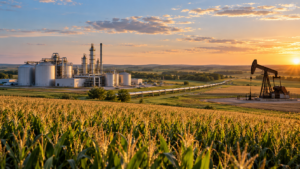
America’s energy strength is not built on one fuel, one technology, or one region. It comes from making practical use of the resources, infrastructure, and ingenuity we already have. Enhanced oil recovery is one example of how captured carbon dioxide can support that approach by helping produce more domestic oil from existing fields.
The concept is straightforward. Even after an oil field has gone through conventional production, a significant amount of oil can remain trapped in the rock. In carbon dioxide enhanced oil recovery, captured CO₂ is compressed and transported to a suitable oil field, where it is injected deep underground. The CO₂ helps oil move more easily through the reservoir toward producing wells.
According to the U.S. Department of Energy, CO₂ enhanced oil recovery has been used in the United States for decades. The department’s National Energy Technology Laboratory reports that the process can increase recovery from some reservoirs by an additional 4 to 15 percentage points beyond primary and secondary recovery.
Enhanced oil recovery puts captured carbon to productive use
Carbon capture is often discussed in terms of reducing emissions from facilities such as ethanol plants, fertilizer plants, natural gas processing facilities, and other industrial operations. Enhanced oil recovery adds another part to that conversation: utilization.
Instead of treating captured CO₂ only as something to manage, enhanced oil recovery can turn it into a useful input. During the process, injected CO₂ is separated from the produced oil and recycled for additional injection. A portion remains stored in the geologic formation, and operators can manage the site for associated underground storage under applicable requirements.
That creates a practical connection between carbon management and domestic energy production. It can also provide an economic use for captured carbon, helping support the infrastructure needed to move CO₂ from facilities where it is captured to locations where it can be used or stored.
For agriculture, that connection matters. Ethanol production provides an especially concentrated stream of CO₂ that can be captured. Building more pathways for that carbon can strengthen the value of carbon capture projects, support the long-term competitiveness of ethanol, and help protect an important market for American corn.
Getting more from existing American oil fields
Enhanced oil recovery is not about starting from scratch. It is about getting more value from reservoirs and infrastructure that have already been developed.
That is important because the global oil market can change quickly. Geopolitical conflict, severe weather, transportation constraints, and unexpected supply disruptions can all affect the availability and price of crude oil. The U.S. Energy Information Administration notes that these events can create uncertainty and contribute to greater price volatility.
No single project or technology can insulate consumers from a global market. But a diverse and reliable domestic energy base gives the United States more options when overseas markets become unstable. Producing additional oil from existing American fields can help strengthen domestic supply, support American jobs, and reduce vulnerability to disruptions beyond our borders.
That added resilience matters for families, farmers, and businesses. The price of oil affects far more than the number displayed at a gas station. It influences transportation, freight, farm operations, manufacturing, and the cost of moving products throughout the economy. Strong domestic production does not guarantee a particular price, but dependable supply can help cushion consumers when global markets are under pressure.
A practical piece of an all-of-the-above strategy
The strongest energy strategy is one that recognizes how different American industries can work together. Agriculture supplies the feedstock for ethanol. Ethanol facilities can capture a high-purity stream of CO₂. Infrastructure can move that carbon to appropriate locations. Oil producers can use it to recover more energy from existing fields, while associated geologic storage keeps injected CO₂ underground.
That is not a theoretical connection. It is a practical value chain linking agriculture, carbon management, and American energy production.
Enhanced oil recovery will not answer every energy challenge. But it shows what is possible when the country looks for productive uses for captured carbon and makes better use of assets already in place. By supporting enhanced oil recovery, the United States can strengthen markets for captured carbon, create new opportunities connected to agriculture, and add another layer of security to America’s domestic energy supply.